Pages

Thursday, January 24, 2013

Getting Back on the Horse

For all you who have been checking for the next post, it is clear we have been away from the blog for some time.  At this point, two children and a new job are keeping us well occupied.  We have made some huge transitions in the last few years and one more little one is Margo taking over the role of primary blogger.  This is my first post.  I'll bring you up to date, share some photo and video footage, and then name the intentions for future posts.  We'll see how often I can make it happen while I parent two beautiful, engaging boys. 
 
We have learned a lot in these last two years with internship as our primary focus.  We know the intensity of being prepared each day for managing work in the garden and hands-on learning, as well as theoretical lessons.  Managing people, planning, real time logistics, and being with interns almost every day for 3 months are Margo's gifts and not Dan's.  This valuable lesson informs our choice to wait a few more years before hosting interns again.  Once the boys are older (Alten is two and a half, Isaac is 13 weeks), we can commit again to something that requires Margo's attention. Thanks a bunch to Ecology Action and Peris and Samuel for all their support in making this experience possible for us and for the interns.

Alten's first snowperson, thanks Aunt Ragan and Uncle Chris!
This train of thought leads to the big job transition in our lives, shortly before Isaac was born Dan started a full-time job doing construction work in Yellow Springs, OH.  Pros: regular income, great skill building, Dan gets to follow and not manage, enjoyable co-workers/boss.  Cons: commuting 1.5 hours daily in a peak oil era (not sustainable--even with a Prius!), missing out on the daily fun and development of the boys, missing each other.  Let is be noted that we celebrated our 8th wedding anniversary on January 1 (yay!) and this is the first time in our marriage that we have not worked together.

This isn't how we had envisioned our life and isn't how we hope to be living, but it felt like a good choice for right now.  We wonder what this will mean for our garden this year.  We wonder where our journey for simple housing will take us.  We wonder what the next big transition will be.

In the mean time (a phrase I laugh at every time I hear it come out of Alten's mouth), we have delightful boys in our presence.  Isaac is starting to practice rolling over on his side and made one successful roll onto his tummy.  He is the smiley-est baby I know and prefers eye contact and conversation (he has a lot to say) to any toy.  Alten has a huge vocabulary and is enthralled by poems, playing with words, and construction equipment.  His favorite way to bless our meal is by saying what we are thankful for.  His list often includes but is not limited to: combines, snowplows, and bulldozers.
Making Mudball Cookies, Yum!

Future posts: End of an Era: Collapse of the Yurt; Esther and CSHEP; Peris, Mary and G-BIACK; and Name The New Car.

PS-Yes, Alten did catch the chicken and put it into his dump truck.  The next thing, missed by mamavideographer, he dumped it out.

Wednesday, October 24, 2012

Introducing Isaac Wynn!

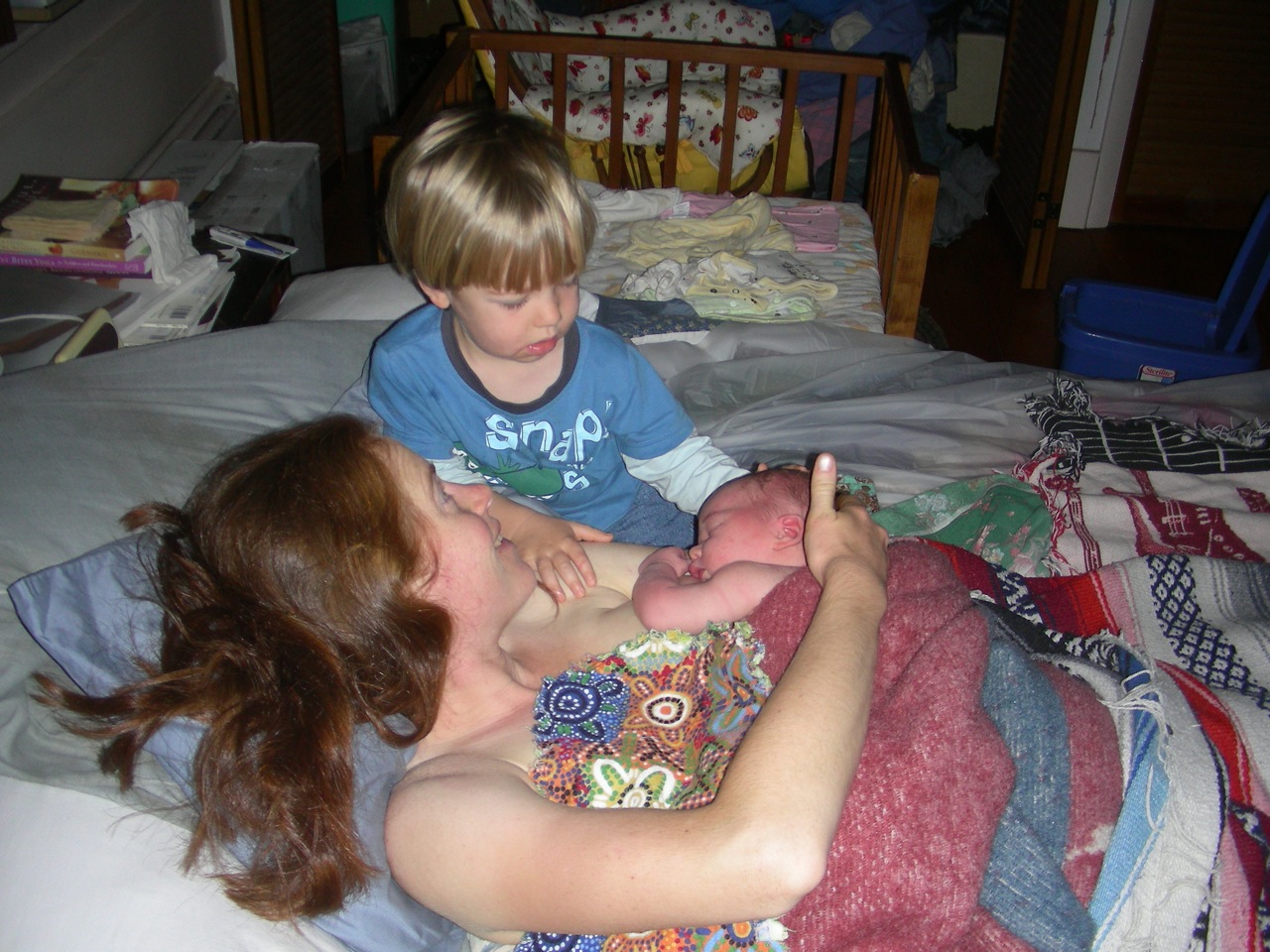
 Isaac joined us the night before last, at 8:43 pm on October 22.  He was 9 lb 5 oz and 20", just a little less all around than his big brother two years and some months ago.
 His birth story is much briefer that Alten's, which lasted a couple of days between when Margo's work began and when he came out.  Isaac gave us shorter notice - labor lasted less than 3 1/2 hours!  Margo gave me a call while I was finishing up work at 5:15 and I hustled home.  She was in touch with the midwife, to whom we reported progress with some regularity.
Labor moved pretty fast in the end, though, and our midwife's capable assistant (who lives much closer than our midwife) got here about 20 minutes before Isaac.  Whew!  With some encouragement I caught him on his way out, and that was a great experience.  A half-hour later our midwife arrived and helped out with the rest of the documentation.  We are grateful beyond words for the experience and confidence that they brought to both of our home-birth experiences...
Thanks to the many who have shared their congratulations with us in the past day or so!  We strongly feel your love; know that it has been received, and that it may be awhile before we talk again :)

Names are, of course, a fun and funny thing.  As many others before us have, we made lists and lists out of books and books and books.  We compared our lists and crossed out names, we devised first name lists and middle name lists, then lists of combinations.  As a general direction we looked for names that meant "joy".  Those who know, know that Isaac means "laughter" or "he laughs" in Hebrew, and that's what we chose from our short list after spending a few waking hours with our new boy.  Alten chose Isaac's second name (from a very short list) and most liked Wynn, which means "cheerful" and "fair" in its Old Welsh roots, and "friend" in Old English.  We count that as a good sign!


At left, Alten is meeting Isaac for the first time.  For the first ten minutes or so he enjoyed touching Isaac and kissing his head.  After that he commenced bouncing around the house, and hasn't really stopped yet.


And here Daddy and Alten are holding the new boy.


Finally, this morning Mama and Isaac watched Alten sort out Mama's vitamins for the day.


More to come!
16964


Wednesday, August 29, 2012

The Other Liquid Gold

It's our first year keeping bees, so everything is new, every event is a mystery, and every new stage catches me by surprise.

I had gone over to Steve's last week to hand him back the starter frame of honey he gave me, the one he put in to help the swarm with sustenance before they started serious foraging.  (It took four months for them to stop putting brood in it.)  I also wanted to ask him when he thought he'd be pulling his honey supers off this year.

When I arrived he was in full swing doing just that; a maelstrom of bees whirled in his immediate vicinity as the glove-less master plied his trade.  He'd pull out a frame, give it a good shake or two to get most of the bees off, brush the others away, and put the frame in an empty super beside him.  When the super was full of capped honey frames he would carry it over to his wagon, which had about ten such supers on it when Alten and I showed up. 

"Hey Steve!  How many times have you been stung?"
"Just three.  OUCH!  Four."

He was heading out of town for the weekend, but expected to be ready to extract later on this week, so I told him I'd get my supers over to him toward the beginning of the week.  That way everything would be prepared ahead of time.

Yesterday I went out to pull our own honey frames using the same system, with a few changes: I used gloves, instead of a brush I cleared the bees with a feather, and Mom helped me out by applying the smoke and taking the bee-free frames over to the wagon.  It was great!  You spend the whole year trying to keep the bees calm and chill, and then, once a year, you throw them into flurry with relatively little regard.  My favorite part, I think, was figuring out how to most effectively give the frame a shake to get the bees off.  That and daintily dusting the frames with a feather, which made me feel somehow quite Elizabethan.

Our Kenyan interns, Esther and Asbeta, were shocked at the way the bees behaved. "You would not try such a thing in Kenya, oh no.  We could not even stand so close.  We would all be stung horribly."  Their bees are, of course, not simply africanized honey bees, but entirely african, and extremely aggressive.  You harvest very late in the day, with a lot of smoke.  Their bees are so volatile that colonies are frequently put on the path to one's house, so that if thieves approach your compound in the night they will be driven away by the stings, and possibly severely injured.  In that light, I can see that our bees are docile as chickens.

I parked the wagon with our two supers in the garage with plans that Alten and I could take them over in the afternoon.  Soon after I came in the house the phone rang, and it was Steve.

  "Hey Steve!  Guess what I just finished doing.  Taking off my honey supers!"
  "Oh, good! Bring them on over - I'm getting ready to start extracting just now."

This required a significant rearrangement of our afternoon's schedule, but within a reasonable amount of time the supers were loaded in the car and I was on my way to Steve's, with no idea what to expect.  I somehow thought we'd be extracting in the cool, dark basement, because that's where I'd seen his equipment, but I was nearly as wrong as possible.  He was all set up in his greenhouse with all its doors, windows, and vents closed.  It was somewhere between 106° and 110° F.  If you want the honey to flow, some heat really helps.
 
  We did my frames first, pulling them out, scraping all the caps off with a fork, and slipping them in each tray of the extractor (photo at right).  His will do two medium supers or four shallow supers at a time, which is part of why he uses shallows now.  Ours are medium, so it goes a bit slower.  We spun them once for one side of the frame, flipped them around and spun, then flipped them around one last time and spun the first side again. It was surprising to me to feel how much lighter they were without the honey.

I had weighed the two supers with their frames full of honey before starting, and after extracting I weighed them again.  This was the only way to find out how much honey was mine, since a good bit of it was also stuck to the sides and the bottom of the extractor when we started on Steve's frames.  We could then top off what was in the bucket till it reached the proper weight.

I had intended to help Steve with his extracting - all 20 supers- but Margo called to let me know the interns needed to go home.  That wasn't a disappointment to Steve, though.  He was very pleased to see me go from interest to questions to getting equipment, then receiving a swarm, and finally to harvesting honey and extracting.  He says so many people say they want to keep bees, but precious few that he knows actually take the leap.  That is all the reward he needs, and it seems to be quite a reward.  I'm lucky to have such a support.

So are you curious about how much we got?  Though it would have been great simply to have a healthy colony by fall, this was a good year.  Our swarm went from absolutely nothing but foundation in May to having fully drawn comb in two brood boxes and most of two medium supers, and even generating some honey on top of that.  We ended up with 47 and a half pounds of honey!  And we are very grateful.
 15530

Thursday, July 19, 2012

A Few Updates

What's new, besides the unbridled heat and incredible drought we're experiencing?  Well, besides a thorough report on our current weather "issues", I want to take a moment to fill readers in on the three projects I've posted most recently: the Triangle, the bees, and the yurt.
You may recall from the March post that we're trying to rehabilitate a little section of a commercially farmed field by the garden.  As the record will clearly show, we have not been blessed with regular rain. As result our already confused spring planting of winter wheat has only grown to about six inches high before browning and dying.  I really can't blame it.  The Canadian field peas were troopers, though, and came to full maturity.  We will harvest their pods to plant seed this fall with our cover crops.  And if the field peas were troopers, well, the Canada Thistle is an insurgent, and equally successful.  We'll shortly be chopping and pulling them up for, as CSU's Extension website states, "Persistence is imperative so the weed is continually stressed, forcing it to exhaust root nutrient stores and eventually die."  As if the weather wasn't stressful enough.  The two bushy-looking plants in the photo are our long-standing success: elderberries we planted in 2010.  One has more deer damage than the other, but both are doing very well. Time will tell how the Triangle project progresses.
The bees, the bees.  The bees are fantastic!  The weather that is kicking the tail of everything else is apparently just fine for our new colony.  In early May, you might recall, our friend and mentor Steve called us up to say our swarm was ready to pick up.  It was a biggish one, and he imagined it might give us some honey this year.  Each successive week I went through the hive, adding supers as time went by.  The first week of June showed a population boom as the first brood raised by the colony started hatching out.  The second week of May I had added the honey super, since the two brood boxes had almost all their comb drawn.  It was the second week of June before there was any amount of comb drawn in the honey super, but two weeks later that super was full of capped honey!  Wow!  Is this normal or not?  I don't know, but it was a great surprise to me.

  I added a second honey super then, but it has been so hot since that day that I haven't done anything more than take some water out to them and stagger their supers for better ventilation.  Maybe next week will get cool enough to check again.  Does this picture seem odd? The first evening I went out to look and saw them doing this I freaked out just a little. But a quick internet search brought up the term "bearding," which refers to the way they can hang on each other form the bottom.  Colonies do it in hot weather.  You understand, right?  Who wants to hang out in stuffy overcrowded house after working all day?

The yurt is still a mixed bag, but is quickly transitioning into livability.  A few of the finer points are the 1) leaky roof, 2) the loose rafters, and 3) the method of attaching the wall.  I wouldn't have seen issues past point one if it had not been for the extreme weather we got back at the end of June.  For any of you who lost power in that storm, you are familiar with the high winds that accompanied the relatively little rain.  It was enough to demonstrate that the yurt can withstand severe weather if it is sufficiently prepared (which it wasn't).
 For one thing, the rafters are all meant to be secured to the wall cable by means of a notch and screw, and to the center ring by a metal plate.  They all had the notch and screw, but I had not gotten metal plates for the new rafters I made.  When the high winds came, two rafters fell out of the center ring.  Now I know.

It also showed my method of attaching the wall to be faulty.  Since there were no instructions with the yurt, this point is a matter of my own creativity in problem solving.  It may be hard to picture, but try to imagine: along the top of the canvas wall there are two rows of grommets.  Who knows what Spirit Mountain Yurts envisioned - they have no comment.  So I used S-hooks to attached the top row of grommets to the cable atop the lattice wall (see photo above), and I laced a rope between the lower row of wall grommets and the grommets in the roof. When the wind came it pulled up the roof edge and knocked down many of the S-hooks, leaving great gaps for the rain to blow in.  So I guess it's a good thing we didn't get much rain then.

As to the leaky roof, I caulked it with silicone.  The rains today, gentle and soaking, showed that at least a few spots need better caulking.

 I look forward to sharing overwhelming success with you all as reports come in of weedless plots, gallons of honey, and comfortable, stable, lived in yurts!

14640

Sunday, July 8, 2012

Our Boy

Yesterday afternoon we asked Alten if he wanted to go get ice cream.  His body immediately stiffened, his eyes got wide, and he proclaimed:
 "I love that!  I reeeeeally love that!  Alten's tractor likes ice cream, too!"
This is the boy we swore we would never give processed sugar.  What happened?
 I think it's because Dad sneaked him that chocolate when he was ten months old...


14291

Monday, June 11, 2012

There's a Hole in the Yurt Roof, Dear Liza, Dear Liza

Anyone else know that song?
  As a follow-up to the euphoric yurt-raising post, I though I might take this opportunity to solicit ideas for patching holes in vinyl roofs.  There are plenty of products out there for vinyl seats, pools, and decorative Cadillac roofs, but none specifically for this kind of application.
  As you may have read, I did try a pool repair kit.  The recent rain showed it to be less than effective, and it was only a .2" drizzle.
  There are some other kits out there that may work, but I'd have to buy multiple sets for all the long holes and areas with lots of small holes. 
 Anyway, I would love to hear your creative, functional solutions.

Friday, June 8, 2012

At Long Last - The Yurt!

Those in the know are aware that we have desired to live over at the site ever since starting our garden project.  It would make everything easier - from watering, to scaring deer away, to getting little things done here and there at odd moments throughout the day.  All things that a distance of a half a mile makes either more difficult or impossible.  Many were the suggestions:  Get a cheap old trailer.  Fix up the house or the block garage.  Use a tent.  And all were good ideas, but we didn't have the energy to make them happen for one reason or another.

  Then we thought about our friends Brian and Luann (aka Yurtfolk), who have a beautiful and inspiring home in northern Indiana.  It's a 30' diameter yurt. We figured a yurt would fit into our lifestyle well as a seasonal home; we could put it up over at the garden, move in around April or May when the garden really starts picking up, then move back to the house in October or so when the weather turns cold.

  Dovetailing well into our plans, craigslist.org listed a place selling three used yurts in our area just days after we decided to actively search for one.  We took it as a sign, and followed up.

  The sellers had bought their yurts from Spirit Mountain Yurts a couple of years before, and they had all collapsed in a freak windstorm.  The company is not a good one, and if I had done a bit more research on SMY before buying ours second-hand I would have either talked the sellers way down or passed altogether.  We would have saved a lot of trouble that way, but it is likely that we've ended up with a passable yurt at a good price despite all the teeth-gnashing and replacing of parts I've had to do.
  The bottom line is this: the sellers sold us one of their 20' yurts, and were not exactly honest about the damage or the inventory of parts.  The lattice wall was broken in two, and the two pieces of wall didn't match up to make an entire 20' diameter.  It was missing 11 of the 30 rafters, the dome was seriously cracked, and there were holes in the roof vinyl.  Bedsides these points, the sellers did not pass us the packet of instructions on assembly, or answer any subsequent emails or phone calls.

  Spirit Mountain Yurts was not only unhelpful, but completely non-communicative. I found out (by testing a hunch) that they only respond to emails expressing interest in buying a yurt.  They have a very bad reputation across the board, it turns out.

  In spite of this I did attack the project with gusto, at least initially.  I decided to set up our new yurt inside one of our barns, so that weather would be no issue, and so that I could hang a pulley from a beam to help raise the yurt's roof.  I repaired the lattice wall, then secured it with the door in place.  When it came to lifting the compression ring in place, though, I found that one person with a pulley wasn't enough.  After a few attempts and some damaged materials (and morale), I threw in the towel for about ten months.

  Eventually Margo suggested that more hands might make it easier, and a party might make it more fun.  So I held a gathering of men from the Dayton Mennonite Fellowship that we attend, and victory was achieved.  It turned out that putting up the roof, manufacturing the remaining 11 rafters, and pulling out and checking the canvas wall and vinyl roof was a simple and light-hearted task for 12 people.  There was a great deal of joking around the image of me trying to do it all myself.


 I was finally convinced that this yurt might be a good idea after all, so we went ahead and planned a date for the yurt-raising.  In the few days prior to that we would build a platform for it to sit on and patch the roof as well as we could.


  It is at this point that I'd like to plug a company with an appropriately stellar reputation. Pacific Yurts designs and builds exceptionally strong, durable, and versatile structures.  What's more, they have plenty of helpful information on their website, and they answer phone calls and emails.  And, to top it off, they give detailed specifications and instructions on building platforms for yurts of various dimensions, which was especially helpful.  A stark contrast to Spirit Mountain Yurts.

  After gathering the materials Margo's dad and I went through the excruciating process of leveling the 16 concrete piers, put up and leveled the beams, and then screwed down the deck.  The platform took two days, and overlapped with what was supposed to be the actual yurt-raising.  Our friend Knoll came over to help finish the decking and drip-edge that Saturday, and by the time we called it quits that night the three of us had put up the lattice wall, the door, and the rafters and compression ring.

  Knoll came back over the following Monday to help me muddle through the installation of the canvas wall, vinyl roof, and dome.  This was one step that filled me with trepidation, because I had no idea how it would all fit together.  The grommets on the wall canvas looked nothing like the descriptions any other yurt companies gave in their own assembly instructions, and Spirit Mountain Yurts remained, of course, eerily silent.  But we succeeded against all odds, and the first rain showed it to be mostly water-proof (my roof patching was not quite thorough enough).

  So now we are yurt dwellers!  At least, we will be when we move in next week.  We have already spent a good deal of daytime in it between garden tasks, and Alten can vouch for its excellent nappability. 

  There is a long list of people who made this yurt possible - Chris W.,  Zach, Ben, Brian, Jeff, Kevin, Kevin's dad, Tim, Mike, Jason, Dave, and Will all lent a hand in the barn putting up rafters and giving me a strong dose of optimism and creativity.  Chris R. helped out caulking the drip-edge plywood and persuading it into place.  And without Rex and Knoll, to whom I give endless thanks, the platform and raising would have taken three weeks instead of three days. That is no exaggeration.  Margo gets credit for keeping the thing on track, and Alten gets credit for looking cute all the time.

13400